The Last Pure Weapon
125 cars. Two configurations. One objective.
To go faster than anything the world has seen — and prove it.
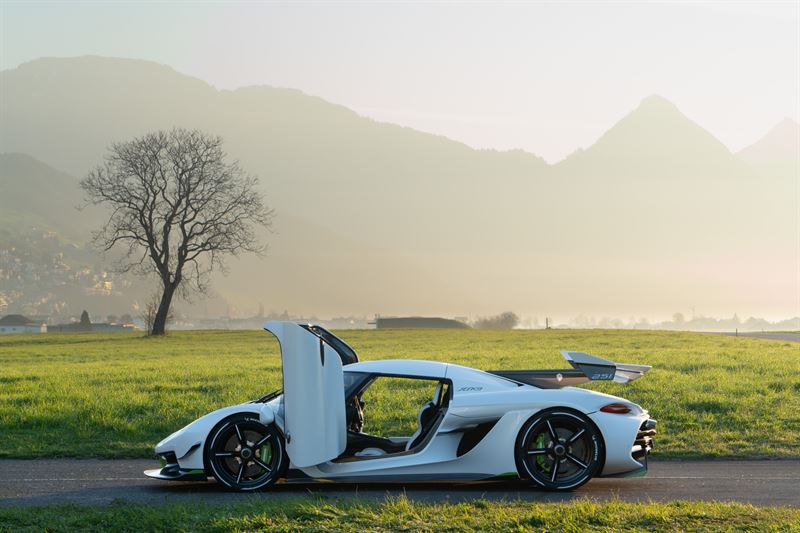
There is a small town in southern Sweden called Ängelholm. Population: roughly 40,000. It is not a place that appears on the maps of the automotive world — or rather, it shouldn't. And yet, from a facility that looks more like a research centre than a car factory, Christian von Koenigsegg has spent three decades building machines that make the rest of the hypercar world look timid.
The Jesko is his most complete statement. Unveiled at the 2019 Geneva Motor Show and named after his own father, it is the car that follows the legendary Agera RS — a car that set multiple world records and then retired, leaving the question open: what comes next?
The answer was 1,600 horsepower, a gearbox that defies conventional physics, and a top-speed variant that has since rewritten the record books. Twice.
A Name. A Legacy.
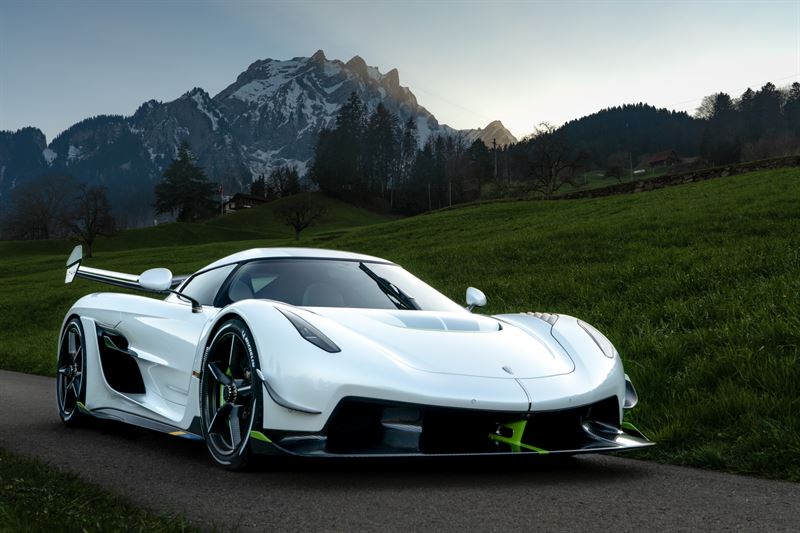
Koenigsegg has a tradition of naming its cars after people and concepts that matter. The Jesko is named for Jesko von Koenigsegg — Christian's father, and one of the key figures behind the company's survival in its early years. His business acumen helped steer the manufacturer through some of its most challenging chapters. He was present at Geneva when the car bearing his name was unveiled to the world.
The gesture matters. It tells you something about how Koenigsegg operates — a family business, in the truest sense, building cars that carry the weight of personal conviction rather than shareholder expectations. The Jesko is not a product designed by committee. It is an argument made in carbon fibre, forged steel, and forced air.
The Engine That Refuses to Compromise
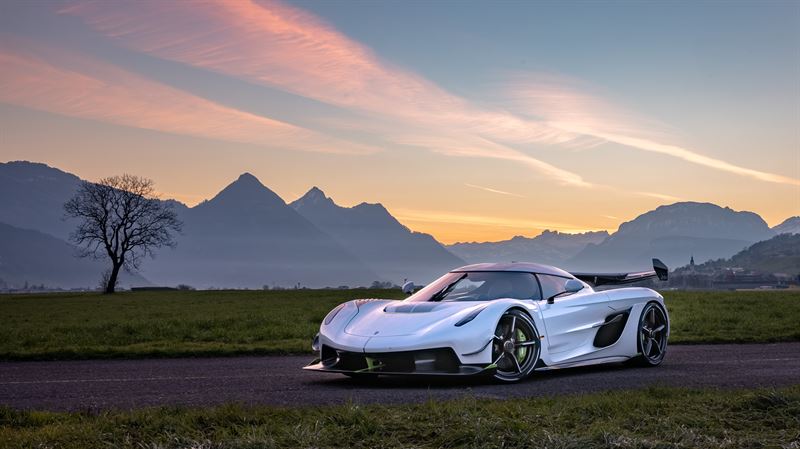
The heart of the Jesko is a completely redesigned 5.0-litre twin-turbo V8 — a flat-plane 180° crankshaft unit that revs to 8,500 rpm and produces 1,280 horsepower on standard gasoline. Switch to E85 biofuel and that figure climbs to 1,600 horsepower, with 1,500 Nm of torque available at 5,100 rpm — and over 1,000 Nm accessible anywhere between 2,700 and 6,170 rpm.
1,600 horsepower. No hybrid motor.
No battery pack. Just combustion, taken to its absolute limit.
The flat-plane crankshaft — one of the lightest V8 cranks in production at just 12.5 kg — allows for even firing across engine banks and what Koenigsegg describes as a more visceral engine note. To counter the vibration typical of flat-plane designs, they developed new super-light connecting rods and pistons alongside the active engine mounts first introduced on the Regera. An electric compressor pre-spools the turbos with a 20-bar shot of compressed air, eliminating lag before it can exist.
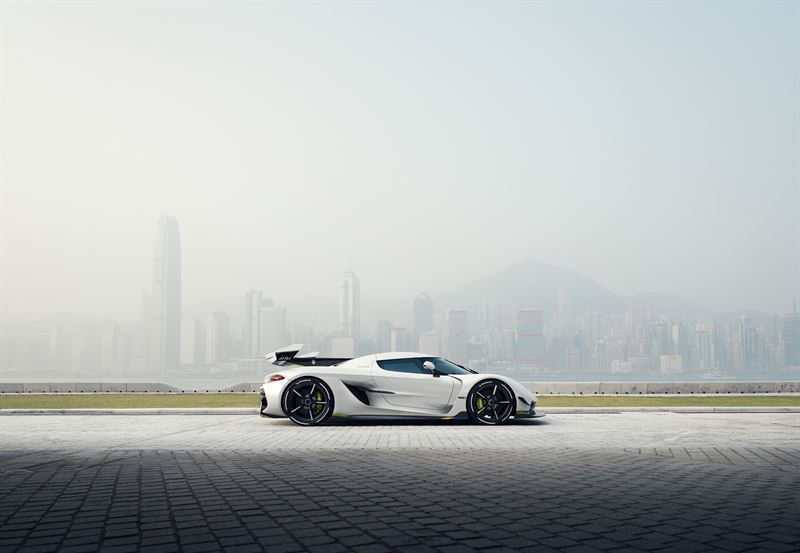
The Gearbox That Changed Everything
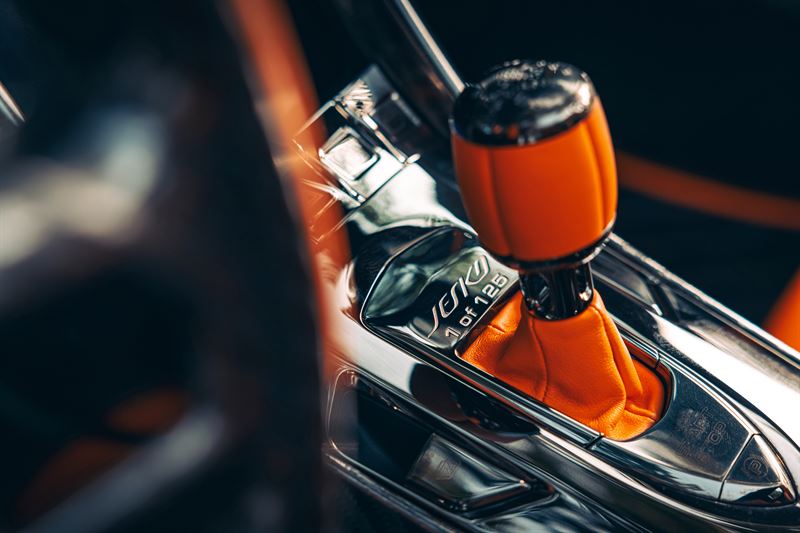
Every modern dual-clutch gearbox works on the same principle: one clutch for odd gears, one for even. The system pre-selects the anticipated next gear and holds it in readiness. Fast, yes. But fundamentally limited — you can only move to an adjacent ratio.
Koenigsegg's answer is the Light Speed Transmission — a 9-speed, multi-clutch unit developed entirely in-house that eliminates that constraint entirely. With multiple wet clutches operating simultaneously, the LST can shift between any two gears instantaneously — not just adjacent ones. From sixth to second. From third to ninth. In zero perceptible time. At any speed.
The LST weighs just 90 kg. A conventional 7-speed PDK weighs significantly more. The engineering team achieved this while simultaneously redefining what a gearshift can feel like — an instrument of precision rather than a mechanical compromise.
Attack vs Absolut. Choose Your Weapon.
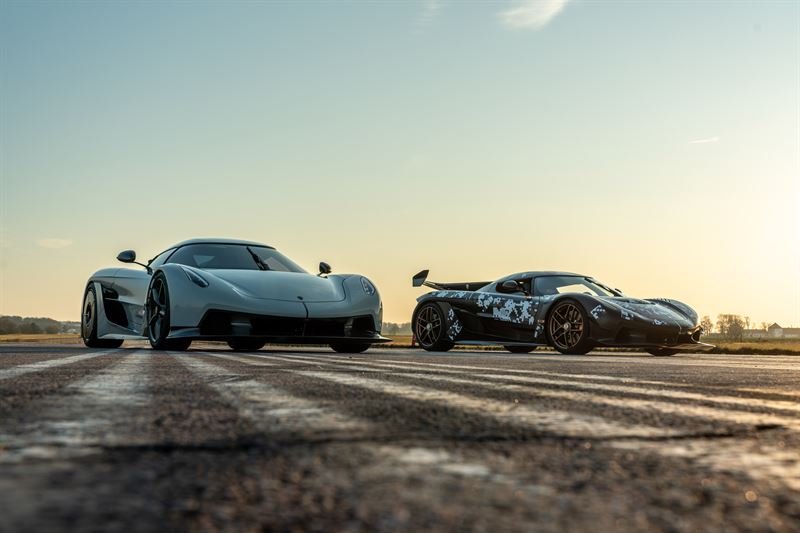
When Koenigsegg announced the Jesko in 2019, they also announced something unusual: the car would come in two fundamentally different configurations — not trim levels, not option packages, but two distinct machines with opposing philosophies.
The Jesko Attack is built for the circuit. Its massive rear wing — a boomerang-shaped carbon structure — generates 800 kg of downforce at 250 km/h, rising to 1,000 kg at 275 km/h and peaking at 1,400 kg at its theoretical maximum speed. Active rear-wheel steering, a first for any Koenigsegg, and Triplex dampers front and rear complete a chassis tuned for absolute lateral grip. This is the car you take to a circuit and use to embarrass purpose-built race machinery.
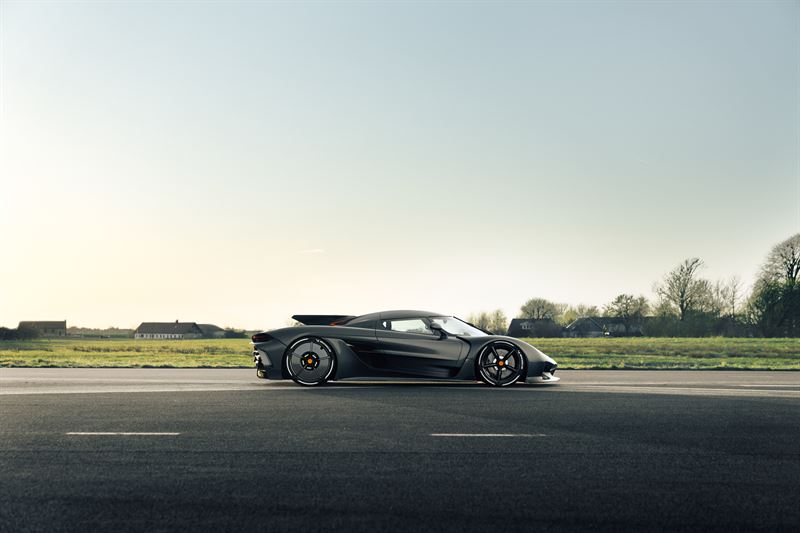
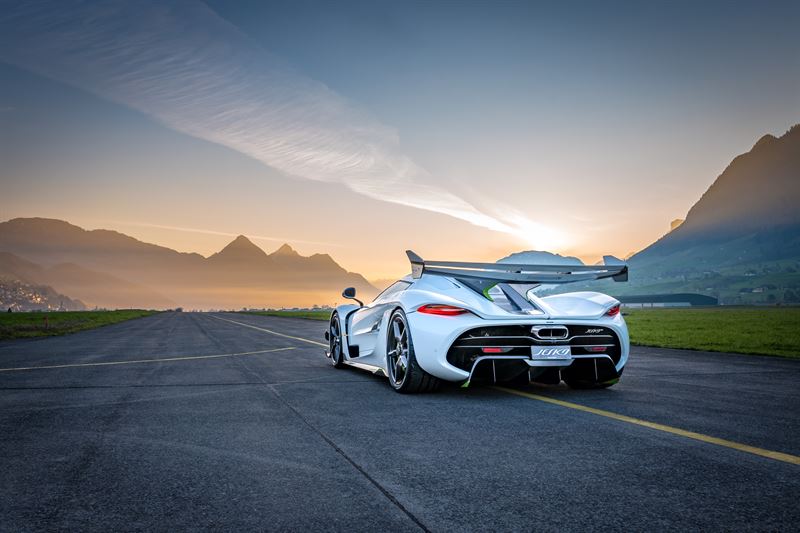
The Jesko Absolut is built for the straight line — and for history. Koenigsegg's CFD team invested over 3,000 hours in fluid dynamics to strip every gram of drag from its body. The result: a drag coefficient of 0.278 Cd, achieved by removing the Attack's rear wing entirely, elongating the tail, adding aerodynamic wheel covers, and reworking every surface from the front splitter to the rear diffuser. Downforce drops to just 150 kg. Top speed climbs toward a number no production car has ever reached.
The Records. Written in Asphalt.
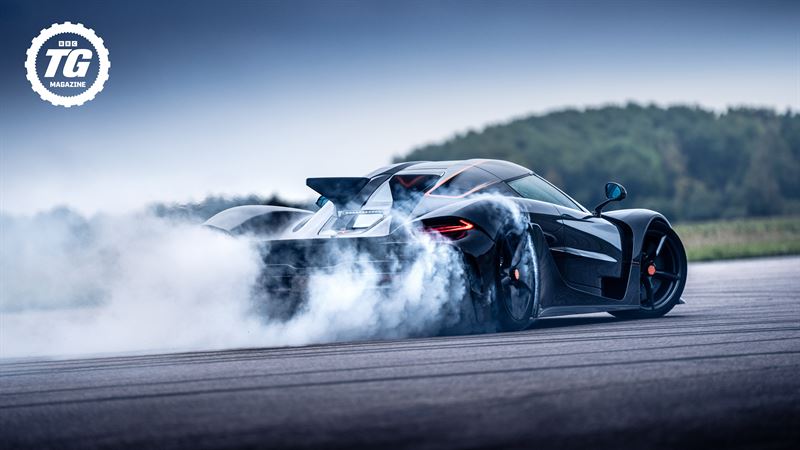
In 2022, the Jesko won BBC Top Gear's Hypercar of the Year — the second time Koenigsegg had claimed that award, after the Agera in 2010. Top Gear's editors cited the combination of raw power, drivability, technological innovation, and design as the deciding factors. Christian von Koenigsegg noted, with characteristic precision, that the award arrived on his father Jesko's birthday. That alone would be a sufficient legacy for most manufacturers. Koenigsegg, characteristically, was not finished.
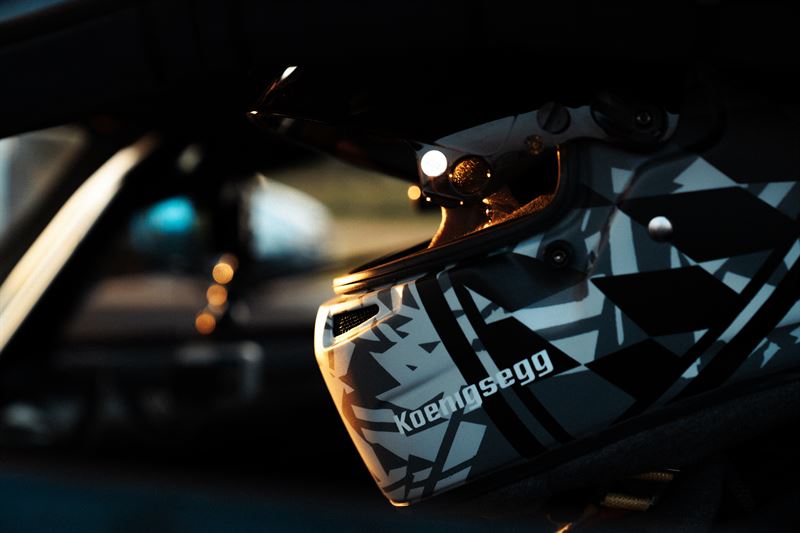
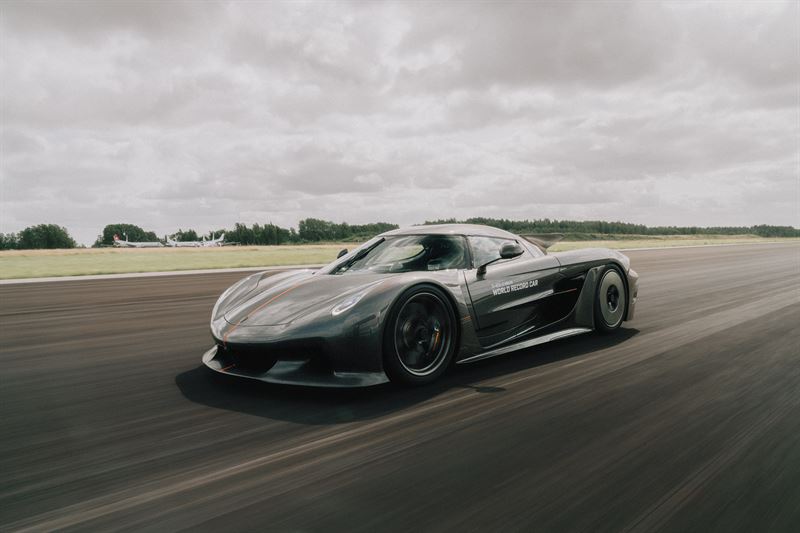
On 27 June 2024, factory test driver Markus Lundh took the Jesko Absolut to the runway at Örebro Airport in Sweden. He left with the 0-400-0 km/h world record: 27.83 seconds. Zero to 400 km/h and back to a standstill. The 0-400 km/h phase alone took 18.82 seconds. The braking phase — from 400 km/h to zero — took 9.01 seconds.
When the Rimac Nevera R reclaimed the record in 2025 with a 25.79-second run, the response from Ängelholm was immediate. Koenigsegg returned to Örebro on 7 August 2025, on a track still drying from earlier rain. Lundh completed the run in 25.21 seconds — a rear-wheel drive, combustion-engined hypercar, on a damp surface, faster than an all-wheel drive electric machine on a dry one. The record stands.
Koenigsegg referred to the competition only as "everyone else." They didn't mention Rimac by name. They didn't need to.
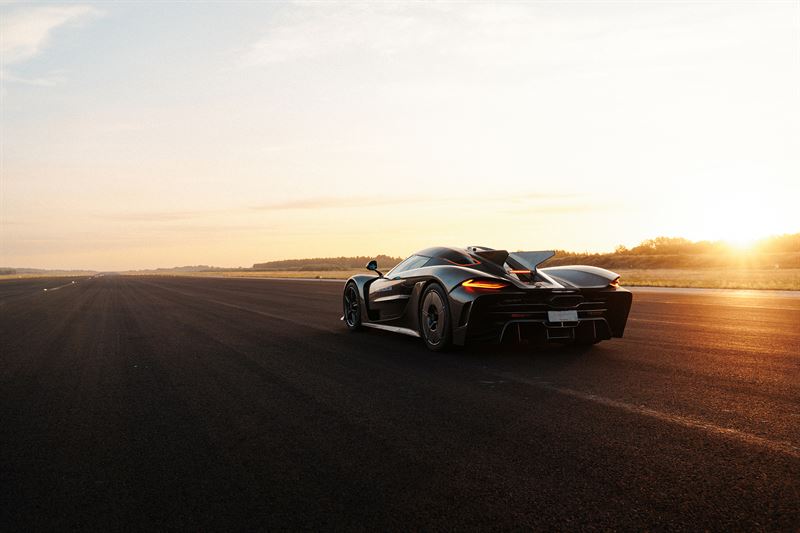
All 125 Jeskos — split between Attack and Absolut configurations — sold out. Every single build slot, at roughly $3 million apiece, resolved itself before the first car reached a customer's driveway.
Christian von Koenigsegg has said the Jesko Absolut will be the fastest car his company ever makes. He is still working to prove exactly how fast that is. The top speed run — targeting somewhere between 530 and 560 km/h — has not yet happened. When it does, it will not be a question.
It will be a statement. Like every Koenigsegg before it.
The obsession is real.
Carry the obsession
into every drive.