The 2026 Corvette ZR1:
1,064 HP of Pure American Intent
A twin-turbo flat-plane V8. 233 mph. A starting price under $200,000. The Corvette ZR1 2026 doesn't borrow from European playbooks — it writes its own.
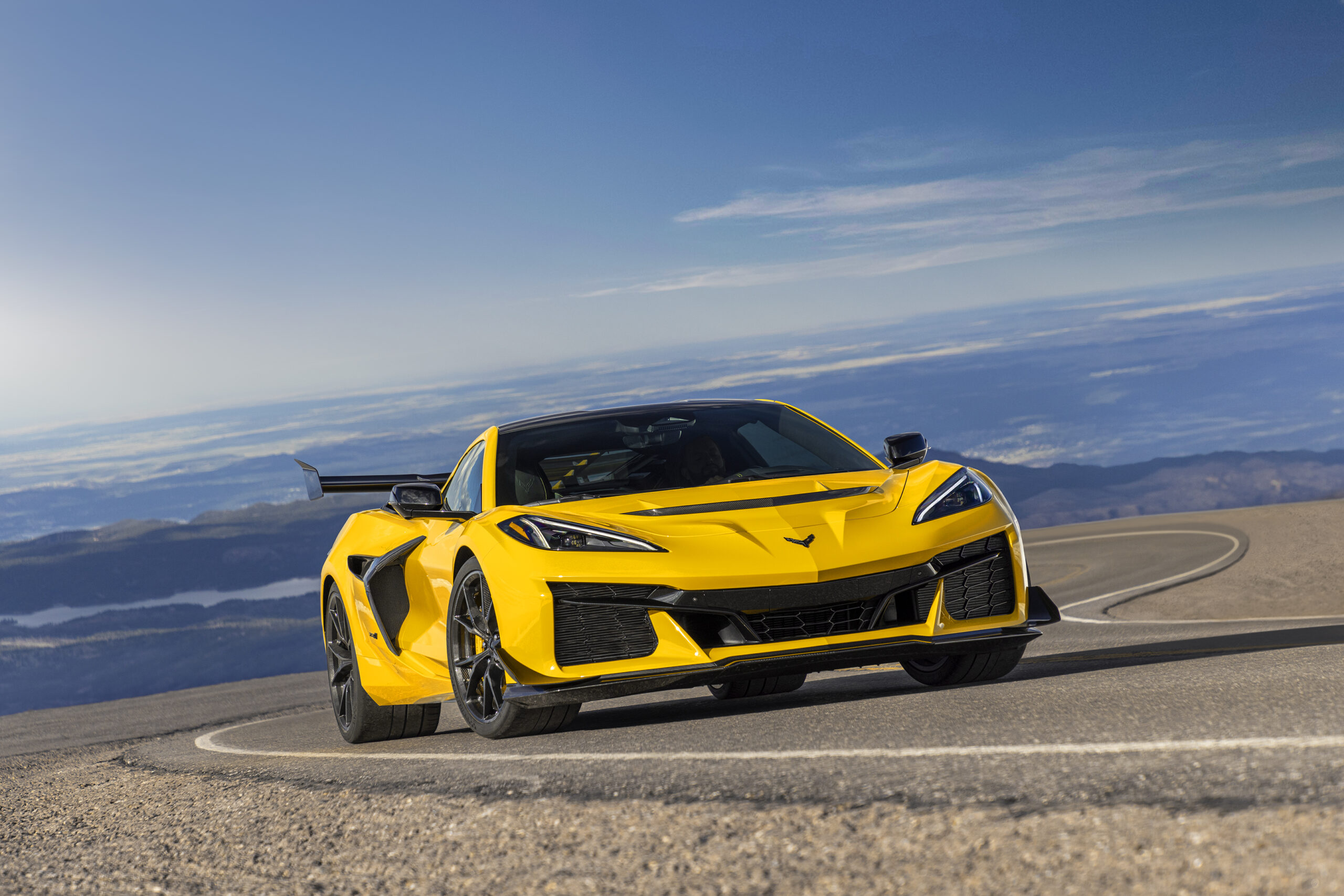
The Corvette ZR1 2026 is the answer to a question nobody thought General Motors would ask: what happens when you stop benchmarking against the Ford GT and start chasing the McLaren 750S? The result is a mid-engine coupe with 1,064 horsepower, a flat-plane crankshaft V8 that revs to 8,000 rpm, and a 233 mph top speed that puts it in genuinely rarefied company — regardless of price tag.
This is not a muscle car. It is not a "Vette with a bigger engine." It is a purpose-built supercar that happens to carry an American badge. And that distinction matters.

The LT7: GM's Most Extreme Engine Ever
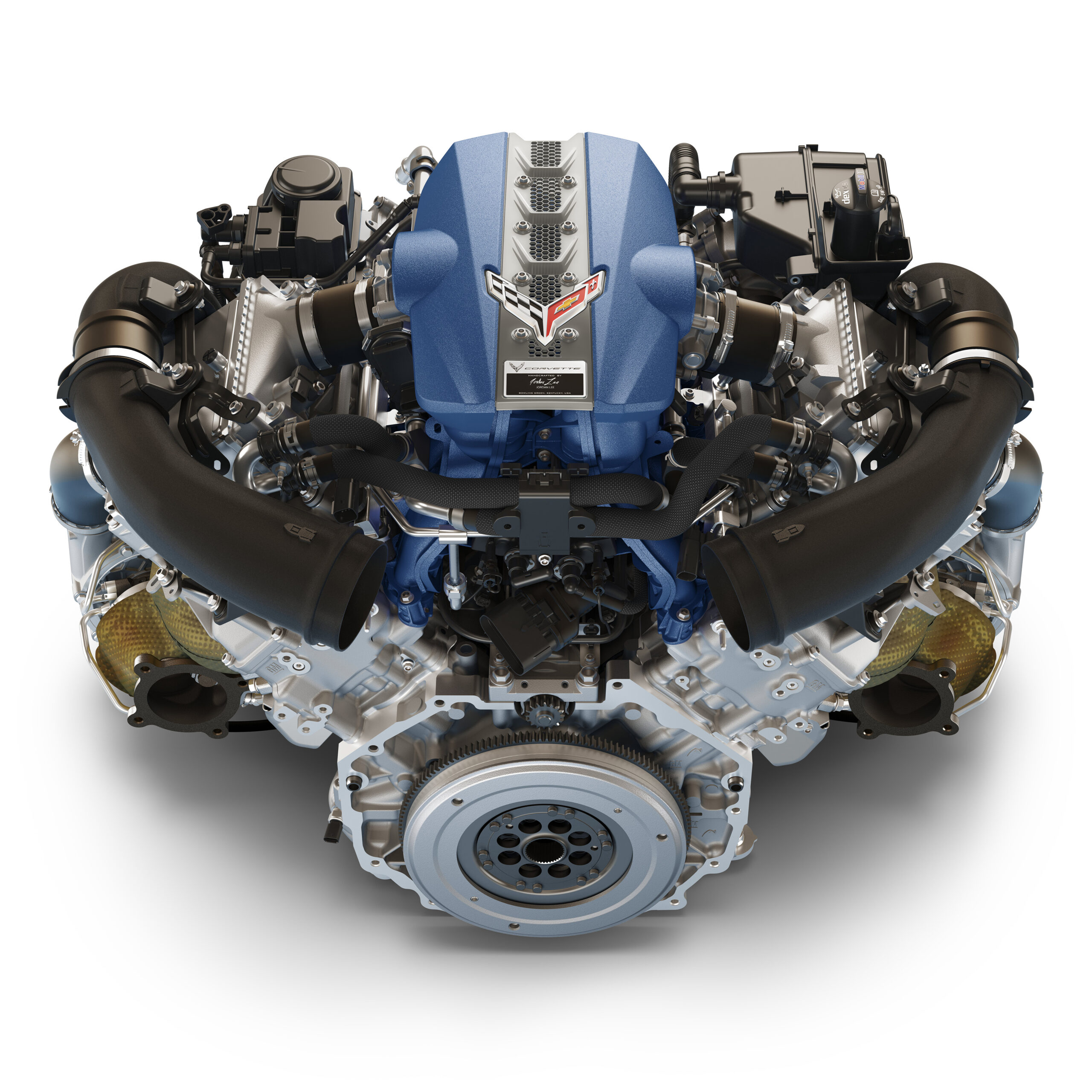
At the core of the ZR1 sits the LT7 — a 5.5-liter twin-turbocharged DOHC V8 with a flat-plane crankshaft. That last detail is significant. Flat-plane cranks are the domain of Ferrari and McLaren, not Chevrolet. They allow for faster throttle response and a higher-revving character that traditional cross-plane V8s simply cannot match.
The LT7 produces 1,064 horsepower at 7,000 rpm and 828 lb-ft of torque at 6,000 rpm — figures that make it the most powerful production V8 ever offered in an American car. The engine is mounted rear-mid position, behind the cabin and ahead of the rear axle, for a near-ideal weight distribution. Power is routed exclusively to the rear wheels through an 8-speed dual-clutch transmission.
The flat-plane architecture means the ZR1 sounds unlike any previous Corvette. At high rpm, the exhaust note shifts from a deep American V8 rumble toward something more surgical — a rasp that has more in common with Maranello than Detroit. It is, by any metric, a remarkable engineering achievement.
Performance Numbers That Demand Respect
The headline is 233 mph. But to understand the ZR1's performance, you need the full picture — and the important asterisks.
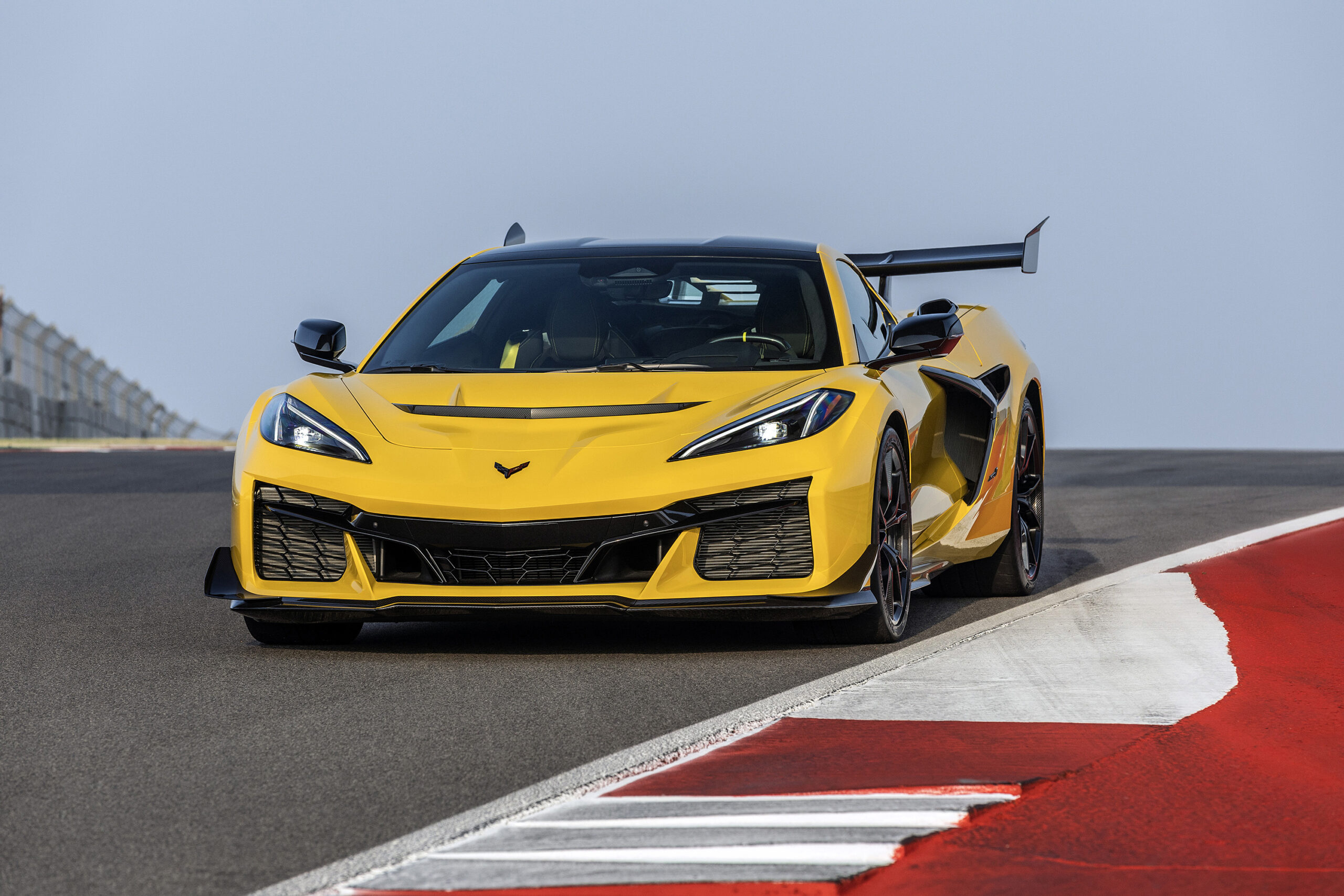
That top speed figure requires the ZTK Performance Package, which adds more aggressive aerodynamics, Michelin Pilot Sport Cup 2R tires, and an upgraded suspension tune. With the ZTK fitted, Chevrolet also claims 0–60 mph in 2.3 seconds. Without it, the standard ZR1 runs to 60 in approximately 2.5 seconds. Both numbers are extraordinary for a street-legal car with a proper trunk.
The quarter mile clocks in at 9.6 seconds at 150 mph. For context, that puts it ahead of the Porsche 911 Turbo S and within striking distance of purpose-built drag cars. The dual-clutch gearbox plays a significant role here — launches are consistent, shifts are near-instantaneous, and the power delivery is relentless rather than brutal.
"The way the horsepower builds — with that constant torque — feels like you're strapped to an aircraft carrier."
This is a car that genuinely changes your perception of speed. Not in the abstract, marketing-speak sense. In the concrete, neurological sense. At full throttle, the landscape compresses in a way that requires recalibration. The ZR1 earns its numbers.
The Chassis and Aero That Make It Stick
A thousand horsepower through the rear wheels only works if the chassis can contain it. Chevrolet's solution is a combination of serious hardware and intelligent software.
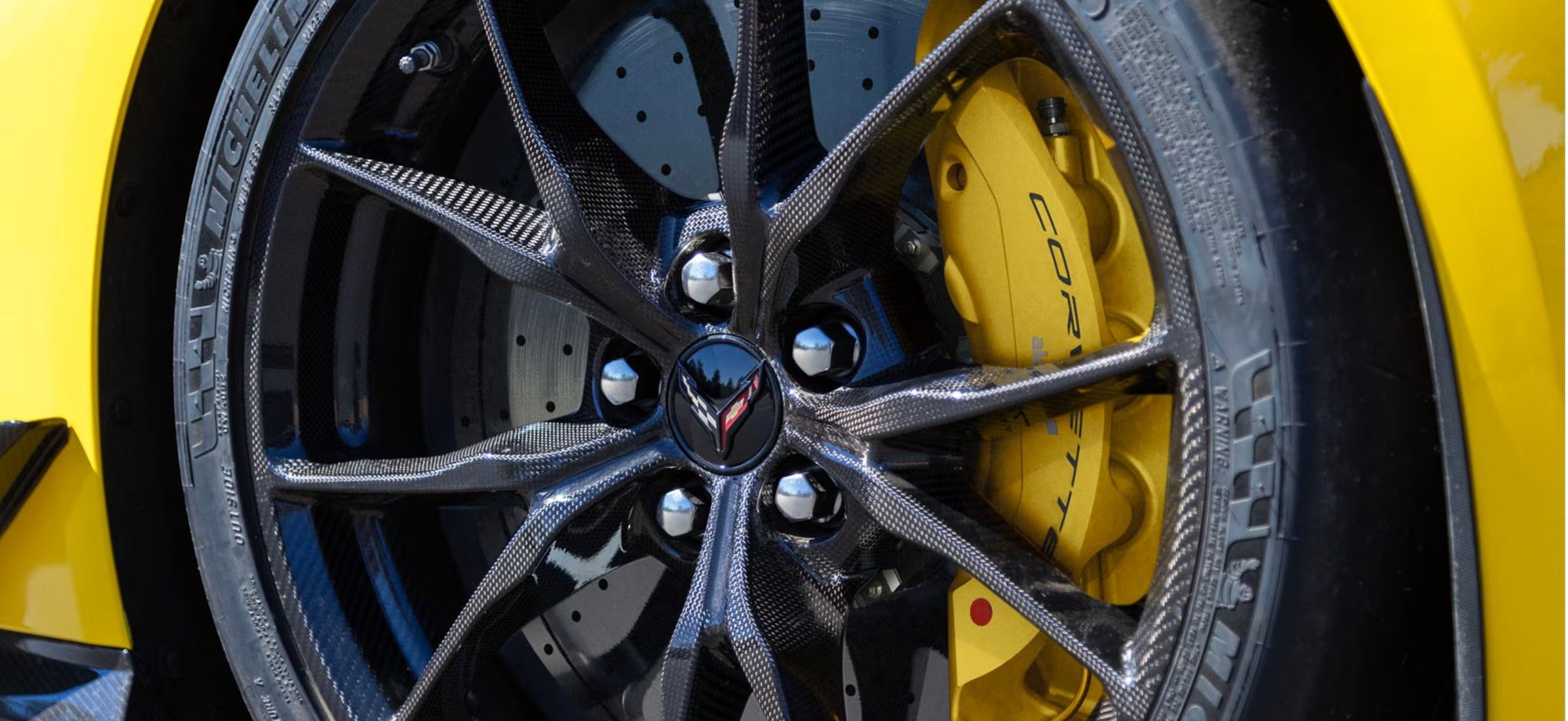
The standard ZR1 rolls on Michelin Pilot Sport 4S tires — 275/30 ZR20 up front, 345/25 ZR21 at the rear. The adaptive magnetic ride control suspension reads the road surface every 10–15 milliseconds, adjusting damping rates in real time. Six drive modes — including Tour, Sport, Track, and Weather — allow the driver to tune the character of the car without needing a laptop.
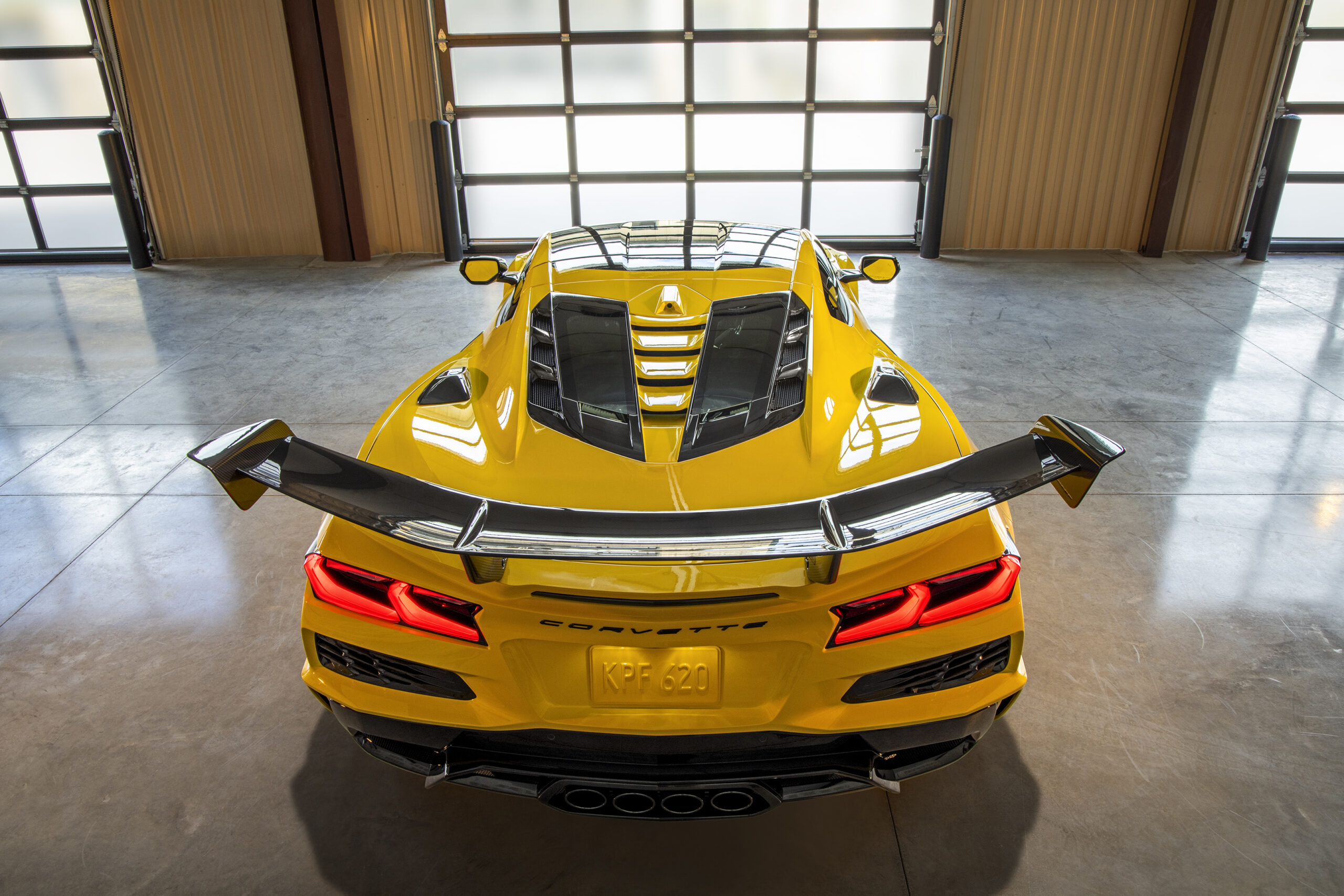
The ZTK package elevates all of this further. It adds Alcon 10-piston front calipers and 6-piston rears — hardware typically found on dedicated GT racing cars. Combined with the Cup 2R rubber and revised aero, the ZTK-equipped ZR1 can generate over 1,200 lbs of downforce at maximum attack. The carbon fiber high-wing, underbody strakes, and dive planes are not cosmetic. They are structural to how the car performs at speed.
Dry weight sits at 3,670 lbs (1,665 kg). The mid-engine layout keeps the mass centralized; the car rotates naturally, without the pendulum effect of a front-engine design. Competing cars like the Porsche 911 GT3 offer a more tactile, analog feel — but they also make 560 hp fewer.
Inside the Cockpit
The 2026 model year brings a revised interior that addresses one of the original C8's few weaknesses — an overcrowded button layout. The new ZR1 features a simplified control interface with a larger center touchscreen and a dedicated driver display for track data. Real-time horsepower, torque curves, lap analysis and video playback are all integrated directly into the vehicle screens, no phone or laptop required.
Five new premium interior colorways are available for 2026, including an asymmetric dual-tone scheme that divides the cabin between the driver and passenger sides. It is a bold choice. Not everyone will love it. Those who do will find it impossible to forget.
Fundamentally, the ZR1 cockpit still feels like a Corvette — low, wide, driver-focused. At low speed, through traffic, it is as liveable as any C8. Only the stiffened ride and the knowledge of what is sitting behind your head reminds you that this is something categorically different.
Price, the ZTK Package and What Comes Next
The 2026 Corvette ZR1 starts at approximately $180,400 (including destination charges). That figure climbs significantly once the ZTK Performance Package, the Carbon Fiber Aero Package, and premium interior options enter the equation — real-world optioned examples land closer to $220,000–$230,000.
For a car with 1,064 hp and a 233 mph capability, that remains a remarkable value proposition. A McLaren 750S or Porsche 911 GT2 RS commands considerably more — and neither delivers the same raw straight-line performance. The ZR1's position on our list of the most exclusive supercars of 2026 reflects exactly that calculus.
Supply, however, is constrained. The ZR1 is a halo model, not a volume product. Dealer markups on early examples have pushed transaction prices well above MSRP — a familiar story for any low-production performance car. If you can find one at sticker, buy it.
And if you thought 1,064 hp was the ceiling — Chevrolet has already gone further. The newly announced ZR1X adds an electric front drive unit to the LT7, pushing combined output to 1,250 hp with all-wheel drive. Starting at $209,700, it represents the next chapter of Corvette performance. The benchmark keeps moving. America keeps pushing.
The obsession is real.
Wear the Obsession
Premium supercar apparel and accessories for those who live and breathe performance.
Shop the Collection