Exotic Drives Club · Tuning · JDM & Performance
The Greatests (JDM) Tuners in the World
From a shed at the base of Mount Fuji to a British motorway at 194 mph — ten builders who refused to accept what the factory gave them — just like the world's greatest supercar tuners.
The Engine Specialists
More boost. More displacement. More everything. These are the builders who start where the factory stopped.
Japan · Est. 1973
HKS
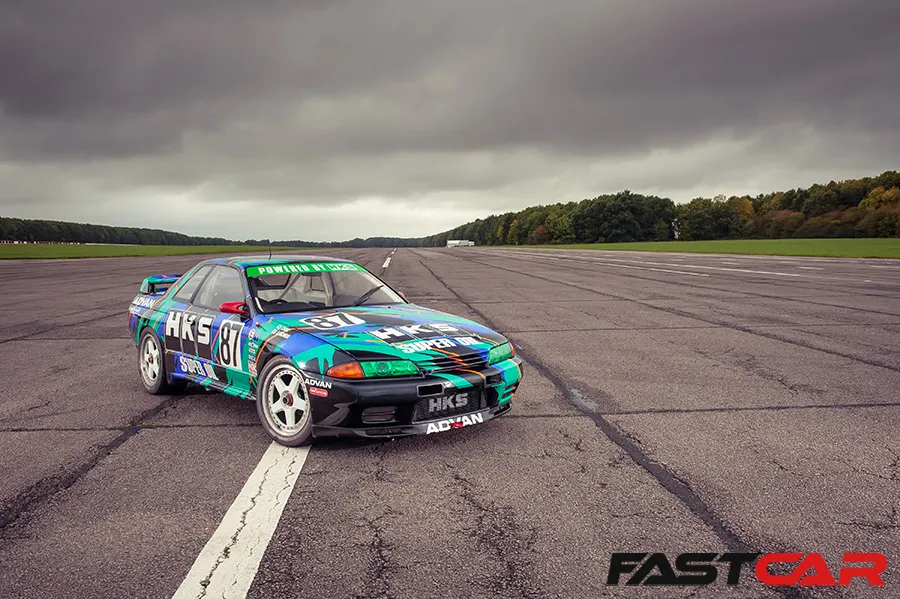
HKS didn't wait for the factory to build a better turbo. Today you can explore HKS's official lineup online. In 1973, founders Hiroyuki Hasegawa — former Yamaha engineer — and Goichi Kitagawa started from scratch in a dairy shed at the base of Mount Fuji. One year later, they released the world's first bolt-on turbo kit, designed for the Nissan Skyline's L20 engine. Power went from 115 to 160 PS. In a country where Nissan had just abandoned its racing programs, the kit sold like nothing before it. Japan's Turbo Age had a starting gun.
What followed was five decades without a pause. In 1983, an HKS-built Toyota Celica became the first Japanese car to exceed 300 km/h. In 1992, their R32 GT-R won the Japanese Touring Car Championship in Group A — the same season they built a 3.5L V12 Formula 1 engine that generated 700 PS at 13,500 rpm and was never allowed to race. From drag racing to drift to time attack, HKS entered every discipline and dominated. Hiroyuki Hasegawa passed away in 2016. The obsession didn't.
Technical Profile
"HKS started in a shed. Fifty years later, they supply performance parts to OEM manufacturers and run their own F1 engine program. That's not a tuner — that's an institution."
Japan · Est. 1968
Tomei Powered
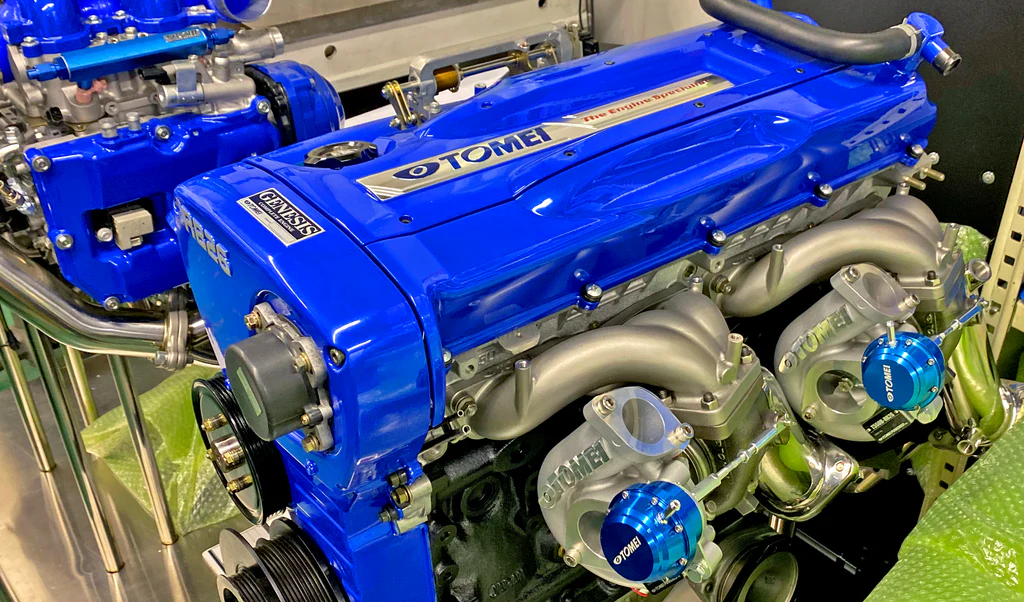
Tomei was born from a Nissan works driver who needed better engine parts than anyone was making. Seiichi Suzuki founded the company in 1968, tasked by Nissan itself to create a dedicated facility for racing engines. He was one of their most talented drivers. Six years later, he died in an accident at Fuji Speedway. His brother took over. In 1994, the company became Tomei Powered — and the name says everything it needs to.
Tomei is the specialist's specialist. Forged crankshafts. Titanium exhaust systems. High-lift camshafts. Complete race engines. They cover virtually every major Japanese platform — RB26, 2JZ, EJ20, 4G63 — and supply engine components to Nismo, OS Giken, and Kaaz. They don't make the loudest builds. They make the ones that finish.
Technical Profile
"Where HKS builds the turbo, Tomei builds what survives behind it. The internals that hold 1,000 hp together — that's Tomei's territory."
Japan · Est. 1977
GReddy / Trust
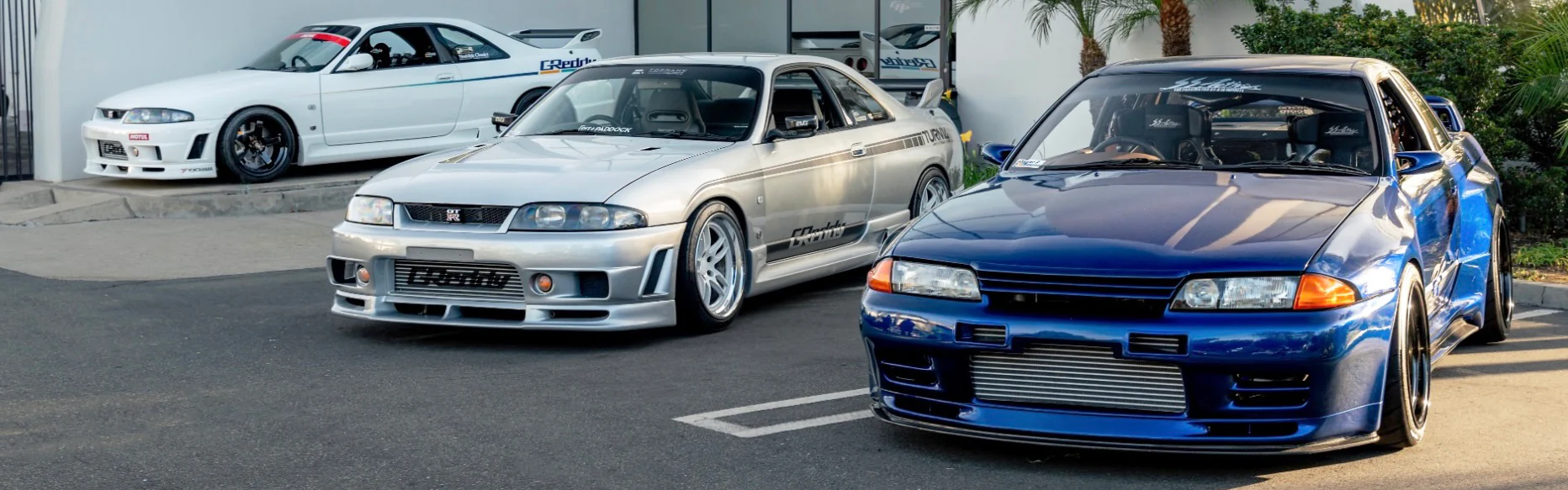
Trust was founded in 1977 in Chiba. For years, a respected local tuner. Then in the mid-1980s, as Japan's street scene reached its peak, Trust launched the brand that would soundtrack a generation: GReddy. A portmanteau of "Great" and "Eddy" — as in the vortex of air through a turbocharger. If you drove anything Japanese and fast in the 1990s or 2000s, GReddy parts were on the car. The blow-off valve. The intercooler. The turbo kit. The exhaust tip that woke up the entire parking lot.
In 2008, Trust filed for bankruptcy — a victim of declining sales and cheap knockoffs flooding the market. They survived, restructured under Chapter 11, and came back. GReddy USA, established in Irvine, California in 1994, never stopped shipping. Today, Trust and GReddy continue to build for the GR86, GR Yaris, and Nissan Z. The culture they created outlived the crisis.
Technical Profile
"GReddy didn't just sell parts — they created a sound, an aesthetic, and a culture that defined an entire era of modified cars."
Japan · Est. 1991
Top Secret
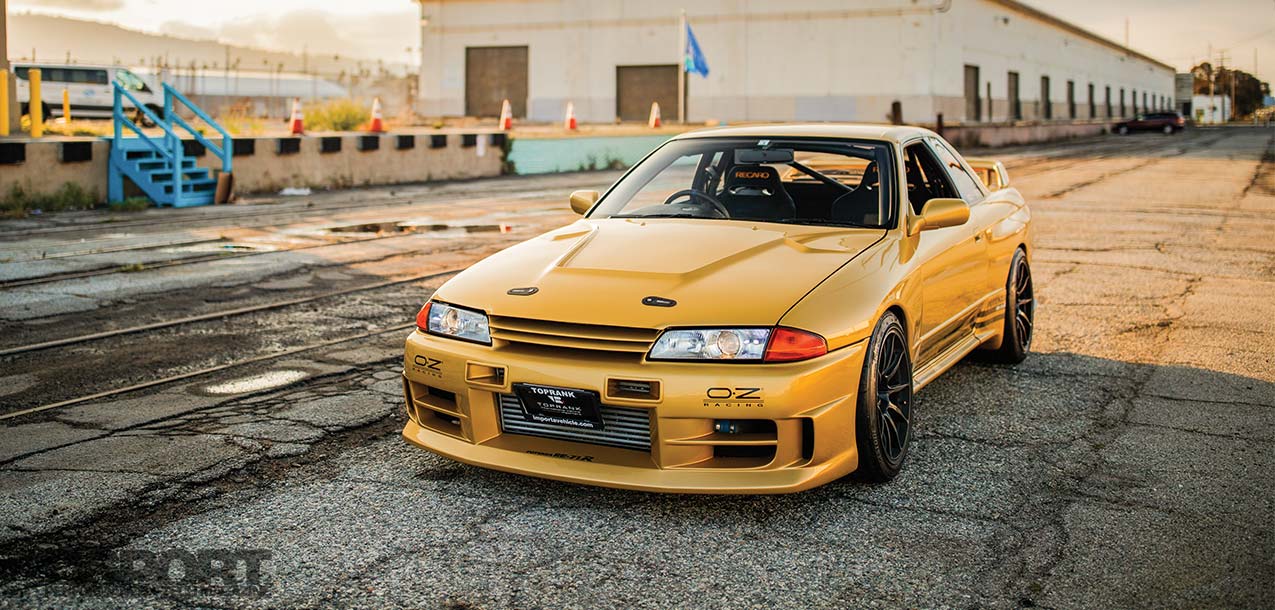
In 1998, Kazuhiko "Smokey" Nagata drove a gold Toyota Supra to 194 mph on the A1(M) motorway in England. It was 4am. It was raining. He was arrested. He called it a good trip. Nagata was born on February 25, 1964, in Hokkaido. He became Toyota's youngest employee at 16, moved to Trust/GReddy, and spent years secretly building cars after hours — until 1991, when he left to open Top Secret in Chiba. The name came from those clandestine builds. It stuck.
Top Secret's philosophy has one variable: how fast. In 2008, at the Nardo Ring in Italy, Nagata drove a Toyota Supra fitted with a Toyota Century V12 — twin-turbocharged to 930 PS — to 222 mph. A record that still stands. Not just any Top Secret build earns the gold paint. Only the ones Nagata considers the ultimate expression of the philosophy. The color is a verdict, not a choice.
Technical Profile
"194 mph on a British public road. One night in a UK jail cell. Smokey Nagata doesn't test cars. He proves them."
Japan · Est. 1984
Nismo
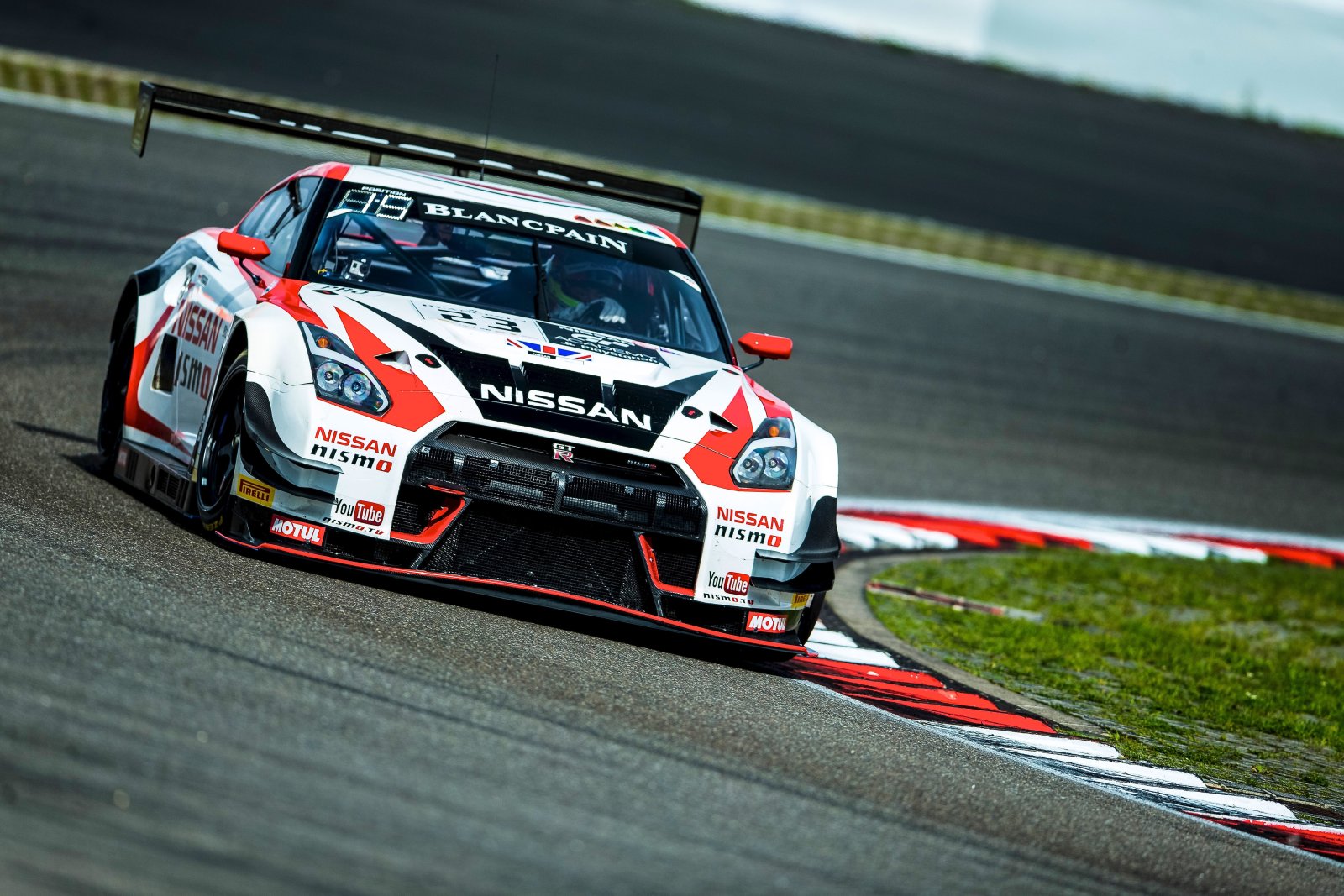
Other tuners answer to obsession. Nismo answers to Nissan — and still wins. Founded in September 1984 in Omori, Tokyo, as Nissan's official motorsport division, Nismo was given a mandate that few tuners ever receive: take racing technology and put it in road cars. In 1985, they won Japan's first World Endurance Championship race. In 1989, the R32 GT-R arrived. Nismo's race-prepped version won 29 consecutive races in 29 starts in Group A. The car earned its nickname — Godzilla — in those seasons.
On the road, Nismo has produced some of the most collectible Nissans ever built. The 270R (1995, 30 units). The 400R (1996–1997, 44 units, R33-based, RB26 bored to 2.8L, 400 PS) — one sold at auction in 2023 for £701,400. The GT-R NISMO R35. The Z NISMO. The Ariya NISMO. When the factory is also the tuner, the benchmark tends to be absolute.
Technical Profile
"Nismo builds Nissans that Nissan themselves dream about. The factory as the tuner — the highest standard possible."
The Body Sculptors
Performance is invisible until the car moves. These builders make sure you know it's there before the engine even starts.
Japan · Est. ~1980s
Varis
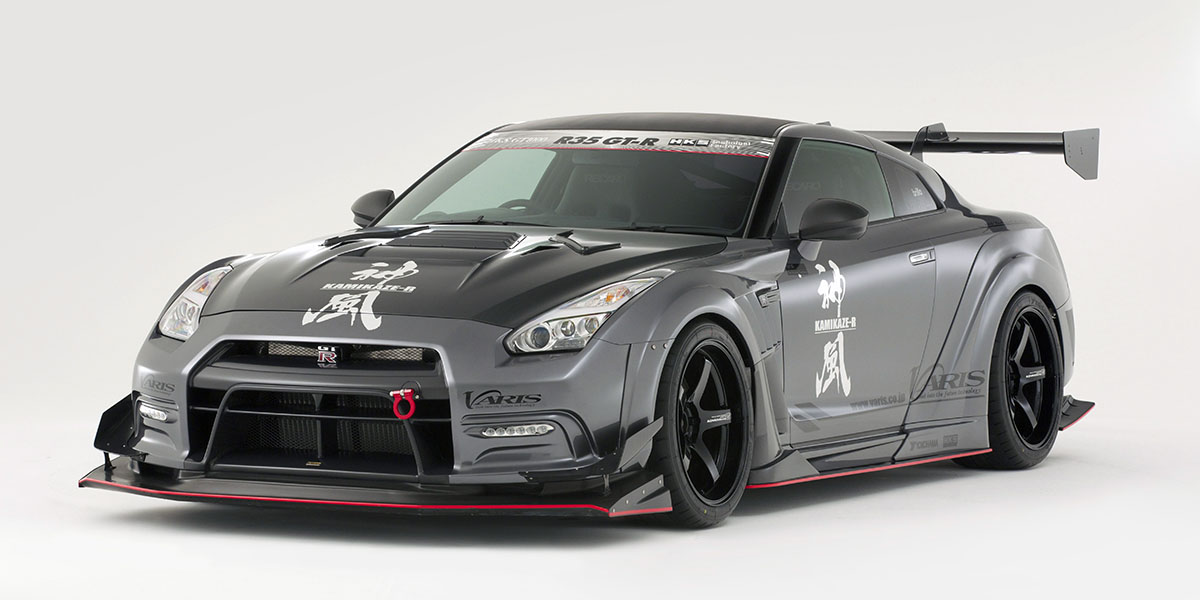
Varis doesn't design aero kits. They design aerodynamics — then make them available for your car. Based in Kanagawa, in the shadow of Mount Fuji, Varis has supplied carbon parts to Super GT teams since approximately 1990, and to Super Taikyu since 1998. Everything the company knows about managing airflow, heat, and structural load at racing speeds is built directly into their commercial offerings. The circuit is the R&D lab. The street build is the end product.
Every Varis component is engineered and handmade in-house by craftsmen. No outsourcing. Genuine CFRP and VSDC materials. The GT-R KAMIKAZE series, the Arising kits for the Supra A90, Civic Type-R, GR Yaris and GR86, the WRX STI widebody — all born from the same racing brief. The word "decoration" doesn't exist in their vocabulary.
Technical Profile
"Varis doesn't make cars look faster. They make cars go faster — and the visual result of that is its own kind of beauty."
Japan · TRA Kyoto
Rocket Bunny / Pandem
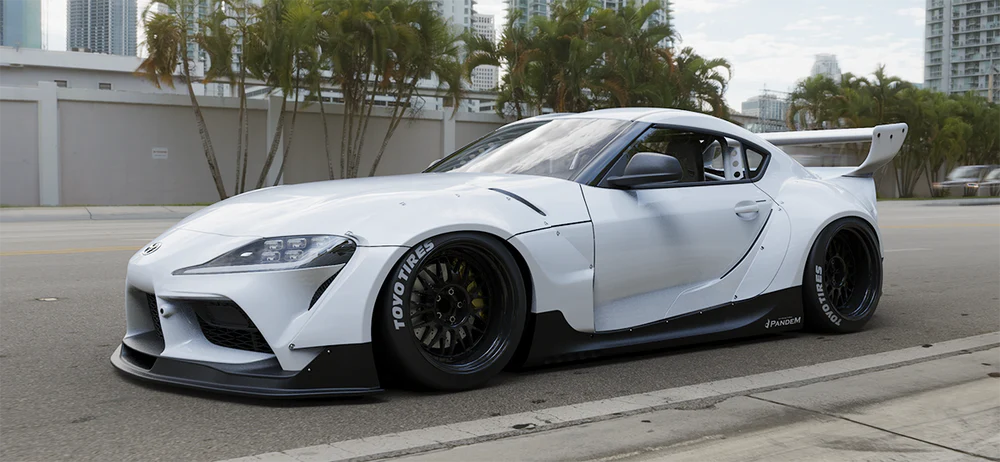
Before Kei Miura became one of the most referenced designers in modified car culture, he was a bosozoku kid racing Osaka's Kanjo loop without a license plate. That rebellion never left — it just found a more precise form of expression. From his TRA Kyoto studio in Kyoto, Miura laser-scans every new platform, designs the kit digitally, and mills each mold from polystyrene blocks by CNC. No clay. No guesswork. Pure geometry.
Two lines, one language. Rocket Bunny is for modern platforms — GR86, Supra A90, Nissan Z. Pandem is for classics, with a more retro, weathered sensibility. Both are unmistakable. Both are handmade. Both draw from the same unlikely combination: 1970s American muscle, DTM race cars, and bosozoku over-fenders. When you see a Rocket Bunny kit, you know exactly what it is. Nothing else looks like it.
Technical Profile
"Kei Miura doesn't follow trends. He designs them — with a laser scanner, a CNC machine, and the spirit of a Kanjo street racer who never grew up."
Japan · Est. 1993
Liberty Walk
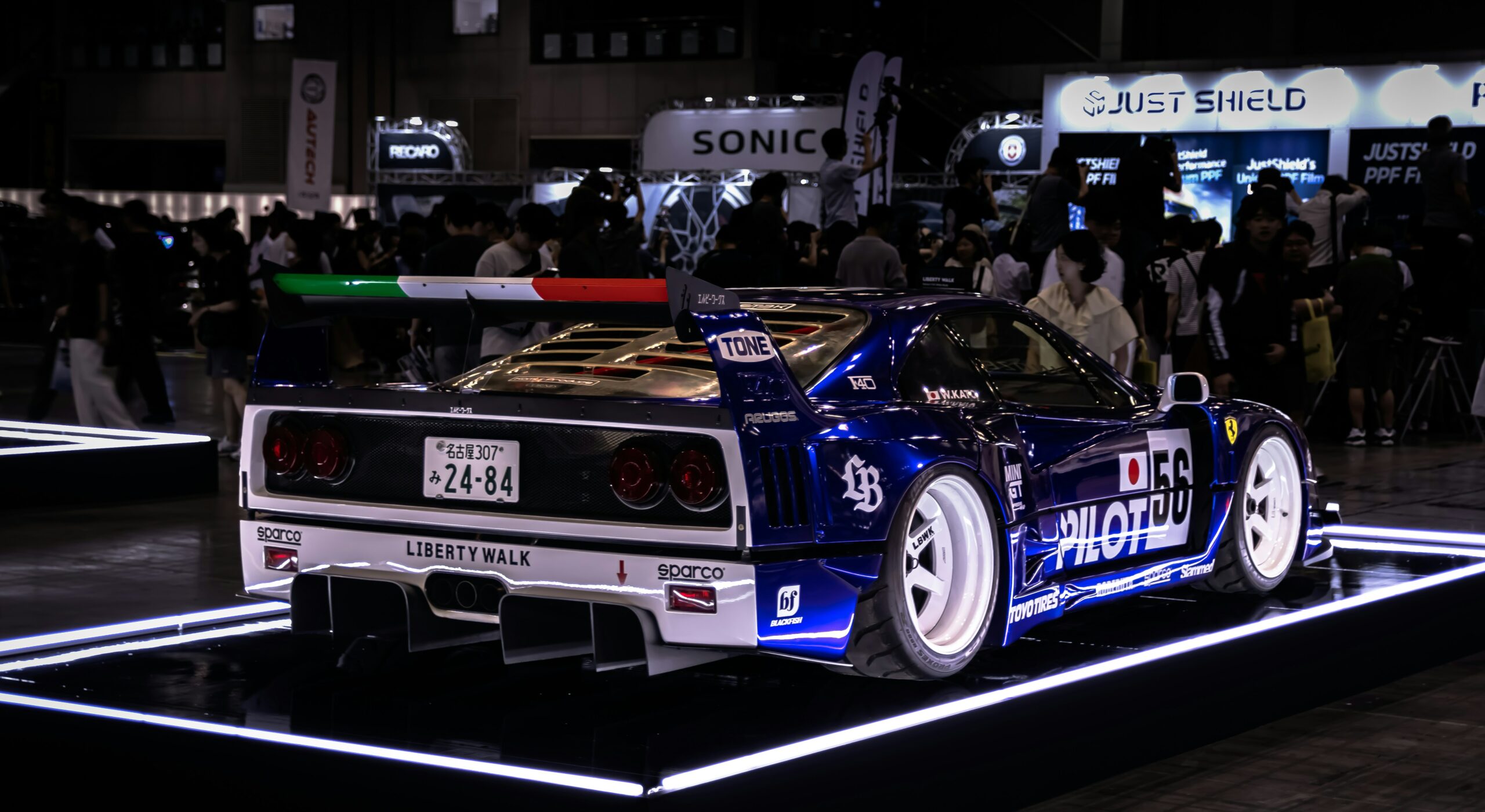
Liberty Walk is the brand you either understand completely or refuse to accept. Wataru Kato founded it in 1993 in Nagoya, Japan, starting with bodykits for kei-cars. His real moment came around 2008, when a friend asked him to make his Lamborghini Murciélago look more dangerous. The resulting kit — wider, lower, riveted, slammed — launched the LB Performance subdivision and changed what people thought was possible with a supercar's body.
The method is as radical as the result: Liberty Walk cuts the arches. The original bodywork of a Ferrari, Lamborghini, McLaren or GT-R is physically opened to accommodate the wider fenders. Purists call it sacrilege. In 2023, they debuted a widebody Ferrari F40 at the Tokyo Auto Salon — one of only 1,311 ever built. The internet watched it millions of times. Kato-san was not surprised.
Technical Profile
"Liberty Walk doesn't ask for permission. It never has. The cutting saw is the first tool. The rivets are the signature. The reaction is the point."
Germany
Prior Design
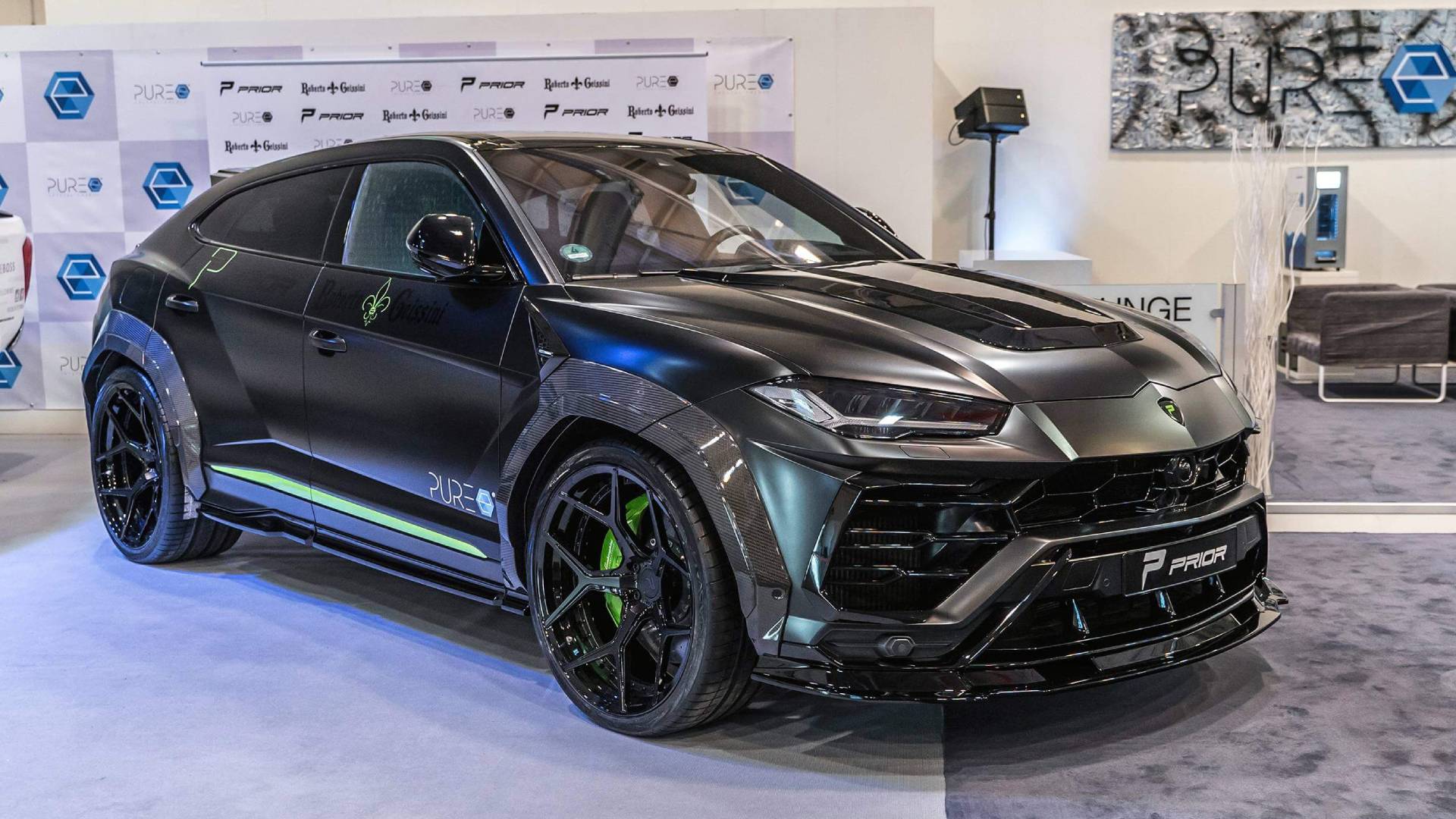
Where Liberty Walk provokes, Prior Design persuades. Based in Kamp-Lintfort, Germany, Prior Design has spent years producing widebody kits for the most prestigious European marques — BMW, Mercedes-AMG, Audi, Lamborghini, Porsche, Bentley, Range Rover — with a single aesthetic principle: the kit should look like the factory's own aggressive option that somehow never made it to production.
Every Prior Design product is engineered in Dura-Flex FRP, validated to exceed German TÜV testing standards. Their fitment is precise enough to require no structural modification on most applications. The catalog includes a Nissan GT-R R35 kit — bringing German engineering discipline to Japan's most famous performance icon. Subtlety at scale. Aggression through refinement.
Technical Profile
"Prior Design makes widebody kits that look like they came from the factory. That's the hardest thing to pull off — and the most convincing result."
USA · Est. 2014
Clinched
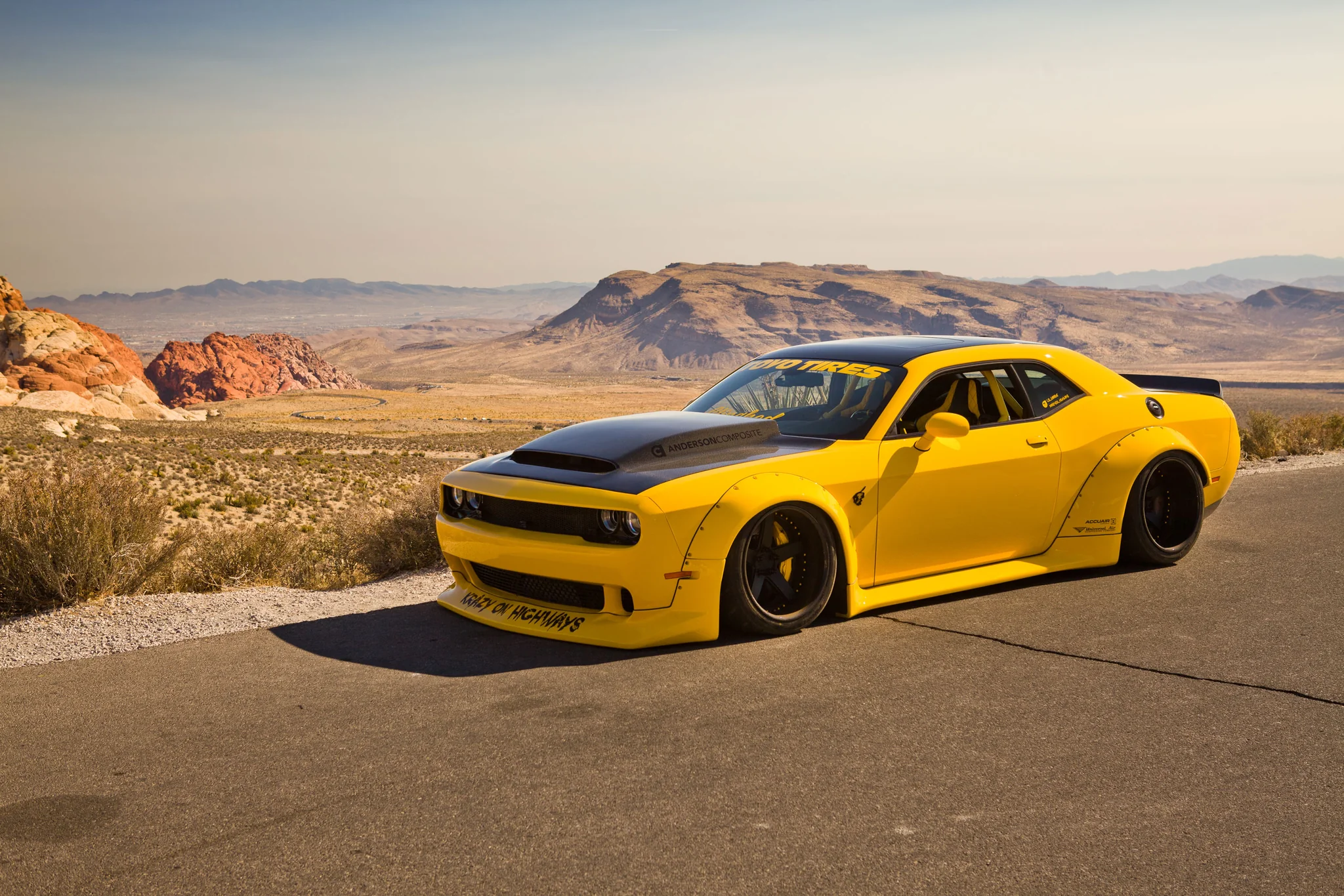
Clinched was founded on March 20, 2014 — the same day they posted their first image online. A Lexus IS300 with a bespoke widebody kit. No press release. No trade show. No distributor deal. Just flares, and an audience that immediately understood what they were looking at. From that single post, a family-owned company in Charlotte, North Carolina has grown into one of the most globally distributed independent widebody manufacturers in the world.
The approach is democratic. High-quality ABS plastic — the same material used for OEM bumpers — with universal fitment across Porsches, BMWs, Dodge Challengers, Ford F-150s and beyond. No arch-cutting required. No specialist installation. Clinched's argument is simple: wide should be accessible to anyone with a car and a vision. The JDM pioneers built that philosophy. Clinched made it universal.
Technical Profile
"One Instagram post. One Lexus. One set of flares. Ten years later, Clinched ships worldwide. The obsession doesn't need a factory — just a vision and the first cut."
The Ten — Compared
| Tuner | Founded | Base | Focus | Iconic Build |
|---|---|---|---|---|
| HKS | 1973 | Fujinomiya, Japan | Turbo · Engine · ECU | R32 GT-R Group A — 29 wins |
| Tomei Powered | 1968 | Machida, Japan | Forged internals · Exhaust | D1GP S15 — championship 2004 |
| GReddy / Trust | 1977 | Chiba, Japan | Turbo kits · Intercoolers | Trust GTR35X — 1,250 hp |
| Top Secret | 1991 | Chiba, Japan | Maximum speed · Custom builds | V12 Supra — 222 mph, Nardo |
| Nismo | 1984 | Omori, Tokyo | Factory-grade motorsport | 400R — 44 units, £701k at auction |
| Varis | ~1980s | Kanagawa, Japan | Carbon aero · Super GT supply | KAMIKAZE GT-R widebody |
| Rocket Bunny / Pandem | ~2010s | Kyoto, Japan | Widebody kits · CNC fabrication | GR86 Rocket Bunny kit |
| Liberty Walk | 1993 | Nagoya, Japan | Arch cutting · Riveted fenders | LB Ferrari F40 widebody 2023 |
| Prior Design | — | Kamp-Lintfort, Germany | TÜV-certified widebody kits | BMW M3 PD-M widebody |
| Clinched | 2014 | Charlotte, NC, USA | ABS fender flares · Universal fit | Lexus IS300 — the first build |
The Obsession Is Real.
For the enthusiast who wants more than a spec sheet — discover the best supercar gifts, gear and collectibles curated by EDC.
Shop the Guide